Agenda 2030 Award goes to Anna Stubbendorff for her research into sustainable diets
Anna Stubbendorff is this year’s winner of the Agenda 2030 Award for sustainability at Lund University. She is being recognised for research showing that when we put climate-friendly food on our plates, it has benefits for both the environment and individual health.

In January, Anna Stubbendorff completed her PhD at the Faculty of Medicine with a thesis on sustainable diets and their impact on our health. The background to this is that our current food production has a very negative impact on climate change, biodiversity and several other environmental aspects around the world.
To address these problems, the so-called EAT-Lancet diet was introduced – a global dietary approach rich in pulses, whole grains, fruit and vegetables – which would be sustainable for both humans and the planet. But how would people’s health be affected in the long term by such a diet, and would we get enough nutrition? Anna Stubbendorff used extensive population studies in her analyses. Her key research findings were:
‘Food that is good for the environment is also good for long-term health. We see clear synergies that reduce the risk of many chronic diseases, such as diabetes, cardiovascular disease and cancer. That is the greatest benefit,‘ says Anna Stubbendorff, who is a dietitian by training.

She has now been awarded this year’s Agenda 2030 Award, presented by the Agenda 2030 Graduate School in collaboration with the Duni Group. The Graduate School’s steering group had a difficult task in selecting this year’s winner from a large pool of high-quality nominated entries. The award recognises innovative research on sustainable development and is aimed at researchers at an early stage of their careers. In addition to the winner, Anna Stubbendorff, Zhiyong Wu and Niklas Warlin, both PhD graduates of the Faculty of Engineering, have each been awarded an honourable mention.
'Positive alignment can be achieved between bodily, societal, and planetary systems'
‘Anna’s work brings us back to the systems thinking that has long been central to sustainable development. Through rigorous scientific analysis, it shows how positive alignment can be achieved between bodily, societal, and planetary systems,‘ says Markus Gunneflo, coordinator of the Agenda 2030 Graduate School.
Anna Stubbendorff hopes that her research can steer food consumption in a more sustainable direction. Sweden’s diet is one of the world’s largest sources of greenhouse gas emissions per capita, mainly because we eat a lot of meat and dairy products. Recently, the concept of a sustainable diet has come under increasing scrutiny, Anna Stubbendorff observes.
‘For example, there is currently a debate about school meals, and we have politicians writing on social media that it is time to ‘put a stop to compulsory vegetarian lunches in schools’. But schools have an educational role that also encompasses food, and what children are served today will also influence what they eat later in life,‘ says Anna Stubbendorff.
She hopes that more people will ask themselves how they can contribute, based on their own situation. Whether you are a consumer, a researcher or a politician, there is always something you can do, she believes.
‘Academia can contribute research on health, implementation and communication, whilst politicians need to be bold and dare to view food as an area where we can change behaviours through, for example, education, regulations and economic incentives.‘
Anna Stubbendorff will receive the award at a ceremony on 14 April as part of Sustainability Week. She will present her research, and the audience will have the opportunity to ask questions. Zhiyong Wu and Niklas Warlin, who received honourable mentions, will also give brief talks on their research areas.
Anna Stubbendorff’s doctoral thesis (in English)
News article: Climate-friendly diet yielded unexpectedly good nutritional values – agenda2030graduateschool.lu.se
Anna Stubbendorff’s profile on Lund University’s research portal
Award citation
“For a long time, we have suspected that diets richer in vegetables, fruits, whole grains, and similar foods may simultaneously benefit both human health and the planet. Using large population-based cohorts, Anna Stubbendorff has systematically examined how diets with lower environmental impact relate to nutritional adequacy, cardiometabolic disease risk, and mortality.
Her work is innovative in its integrated approach, combining environmental life-cycle assessment data with nutritional epidemiology and long-term health outcomes. Through a comprehensive assessment of the trade-offs and synergies between environmental sustainability and human health, she advances both the methodological and conceptual foundations of the field. Anna Stubbendorf’s research provides robust, policy-relevant evidence that climate-friendly diets can offer high nutritional quality while also supporting long-term health.
The combination of scientific rigor, societal relevance, and practical applicability makes Anna Stubbendorff highly deserving of the 2026 Agenda 2030 Award."
Meet the researchers at Sustainability Week
On 14 April, the Agenda 2030 Awards ceremony will be held as part of Sustainability Week in Lund. You’ll have the chance to listen to Anna Stubbendorff, ask her questions and enjoy a sustainable lunch. Honourable mentions Zhiyong Wu and Niklas Warlin will also be taking part. Read more and register via the link (in English). Welcome!
Lund University Agenda 2030 Award
The award aims to promote innovative, interdisciplinary research on sustainable development by early career researchers. The prize is worth SEK 25 000 and is awarded annually by Lund University's Agenda 2030 Graduate School in collaboration with the company Duni Group.

Three questions to Erik Lindroth, Sustainability Director at Duni Group and member of the Graduate School Steering Board
Why did you and Duni Group decide to participate in the Agenda 2030 Graduate School?
"Sustainability is a top strategic priority for us at Duni Group, and we see the value and need for improved scientific knowledge to guide decision-making in society. Being based in Malmö, we see the benefits, but also the responsibility, of being an engaged partner with local academic institutions."
What is your interest in sustainable development?
"Business is a key stakeholder in ensuring progress on sustainable development and we see it as central to creating competitive advantage. We believe that sustainability performance is an inherent strength in today's markets and even more so in the future."
What do you and Duni hope to achieve by sponsoring the Agenda 2030 Award?
"We want to support and celebrate research that advances society's understanding of sustainability challenges and solutions. We can also help spread the word through our communication channels to generate enthusiasm for this important issue."
Wu and Warlin – honourable mentions in the Agenda 2030 Award

Three questions for Zhiyong Wu
You completed your PhD at the Faculty of Engineering (LTH) at Lund University. What was your research about?
'Combustion has been a driving force behind human civilisation for centuries, but burning fossil fuels comes at a cost in the form of carbon dioxide emissions that contribute to climate change. My research explores a promising route in the transition from fossil fuels to renewable energy: burning metal powders. When aluminium burns in steam, it releases heat and hydrogen without producing carbon dioxide, and the aluminium oxide ash can be recycled into metal using renewable energy sources such as wind or solar power. This 'metal fuel cycle' could store and transport renewable energy where and when it is needed. In my research, I use advanced lasers and cameras to reveal the secrets of these tiny aluminium flames.'
What are the most important results from your research?
'Firstly, we developed a high-speed laser imaging system that mapped the invisible aluminium gas cloud surrounding a burning droplet for the first time, revealing the chemistry at the heart of the flame. Secondly, we captured how heat spreads across a single, burning droplet — smaller than a human hair — as it ignites, erupts violently and burns out. Thirdly, we tracked the tiny ash particles formed during combustion and studied their formation. Together, these results provide a new understanding of how aluminium burns, bringing research closer to real-world applications of aluminium as a carbon-free fuel.'
How can your research contribute to a sustainable transition?
'Renewable energy from wind and solar power is abundant but not always available; we therefore need smart ways to store and transport energy. Metal powders, such as aluminium, could form part of the solution: a carbon-free fuel that can be transported to various locations, much like coal or oil today. Prototypes of metal powder burners already exist in the Netherlands, including those used in breweries and for district heating. My research reveals how aluminium burns at a fundamental level, helping to pave the way for the metal fuel cycle to become part of a clean energy system in the future.'
Link to Zhiyong Wu' doctoral thesis in the Lund University Research Portal
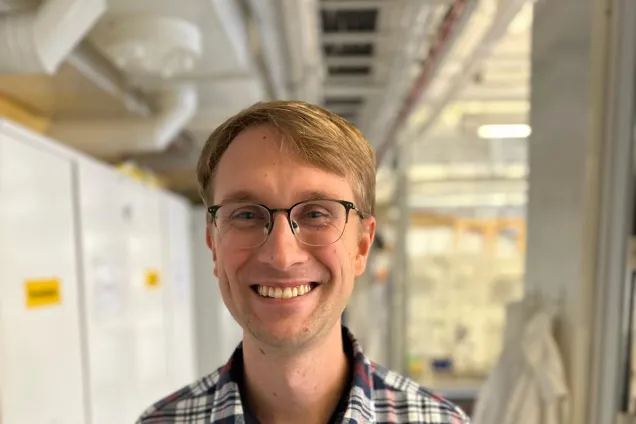
Three questions for Niklas Warlin
You completed your PhD at the Faculty of Engineering (LTH) at Lund University. What was your research about?
'Plastic is one of the most common materials and is found in virtually every everyday object. Its enormous consumption leads to serious environmental problems, and it has been estimated that there could be more plastic than fish in the oceans by 2050 if consumption continues at the current rate. Recycling is therefore a key strategy. However, as many types of plastic cannot be mixed without compromising quality, large quantities are currently incinerated, which contributes to increased greenhouse gas emissions. There is therefore a clear need for developing new sustainable recyclable plastics.
My research has primarily focused on two such strategies: manufacturing plastic from renewable raw materials and chemical recycling. Using renewable sources such as sugar or lignin instead of oil can reduce the climate impact of plastic and minimise dependence on fossil raw materials. This feels particularly relevant now, given the war in Iran.
Chemical recycling involves breaking down plastic that cannot be recycled using conventional methods through chemical means. For example, certain bonds in the material can be selectively broken so that the starting material can be reused to produce new plastic.'
What are your most important findings?
'One of the most important molecules I have researched is the sugar-based molecule HMF. I have demonstrated that HMF can be relatively easily converted into monomers, which can then be polymerised — that is, chemically linked — to create polyesters and polyurethanes with enhanced mechanical properties. However, HMF is comparatively sensitive to high temperatures. I have also demonstrated that incorporating acetal bonds into these polymers enables them to be selectively broken down and recycled by adding acid.'
How can your research contribute to a sustainable transition?
'In my view, recycling is the most important strategy for achieving a circular materials industry. Hopefully, my research will lead to the development of new recyclable materials and products and promote more sustainable plastic management in society.'
Link to Niklas Warlin's doctoral thesis in Lund University Research Portal